[ Previous Page ]
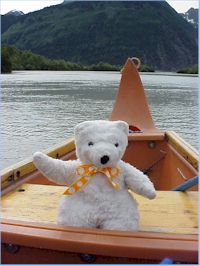 A few minutes later, we reached the shores of the lake. Three long orange canoes were anchored at the beach.
"May I sit in front, so I can see?" I asked.
"Be my guest!" said Mister Kimery.
I clambered into the very front of the canoe. "Perry Bear Ewer, Alaskan Explorer!" I announced. Miss Cynthia laughed as she picked up a paddle and sat down on the seat behind me.
Soon, the canoe was skimming quietly toward the center of the lake. I looked down into the water. It was a deep, milky brown color.
"That's called glacial flour," Miss Cynthia said. As glaciers pass over rock, they grind much of it to very fine dust. When the glacier begins to melt into the lake, it releases the trapped dust. The dust makes the water look dark and milky.
Soon I noticed pieces of ice in the water around us. As we traveled closer to the glacier, the ice chunks became bigger. These pieces of ice had fallen away from the glacier in a process known as "calving". We could see the ice chunks dropping away from Davidson Glacier into the water!
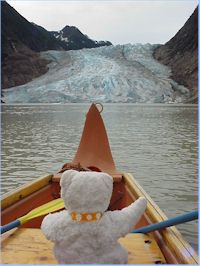 There are names for different kinds of ice that break away from a glacier. Large pieces of ice that have fallen, or "calved" from a glacier are called icebergs. Smaller pieces of ice are "bergy bits", and even smaller ones are called "growlers".
"Listen!" said Mister Kimery. We were quite close to Davidson Glacier. As everyone listened quietly, we heard sharp, deep sounds coming from the glacier.
Glaciers make noise when air trapped in the ice is released, or when ice chunks break away into the water. Large holes in the glacier are formed by melt water, and can make deep, loud noises. Glaciers can hiss or sizzle or boom. Davidson Glacier was talking!
[ Previous Page ] [ Next Page ]